



67% of U.S. marketers agree that many audience datasets are built on siloed signals, leaving brands with a fragmented view of the customer journey.
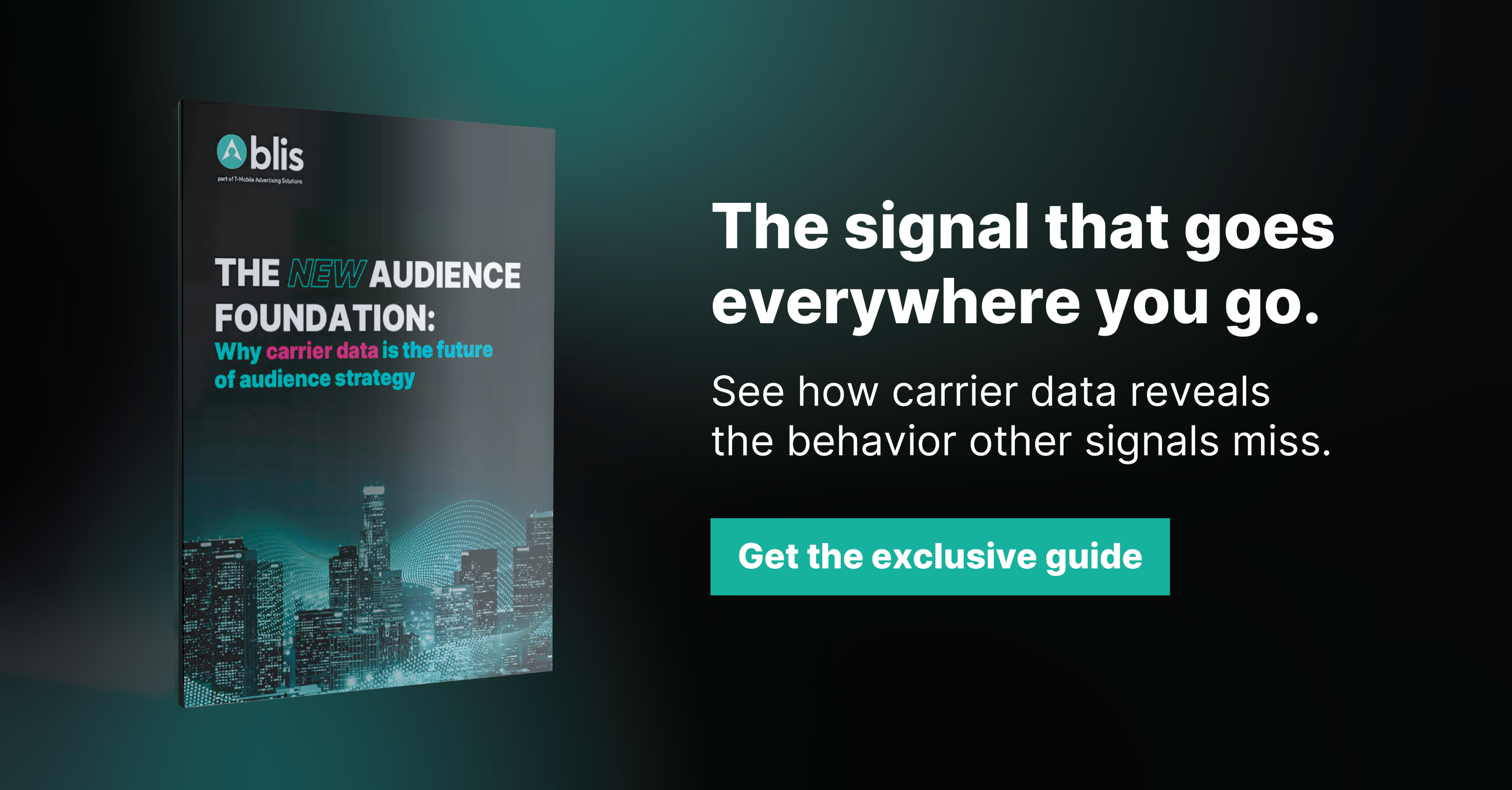
That’s one of the findings from Blis’s new report, The New Audience Foundation: Why Carrier Data Is the Future of Audience Strategy. It explores how marketers can rebuild targeting accuracy, reduce fragmentation, and activate better behavioral intelligence across channels.
The report points to a clear tension. Marketers have more audience data than ever, but many still struggle to turn that data into an accurate, durable view of the people they want to reach. More than half of U.S. marketers, 54%, cite data accuracy or representativeness as a leading obstacle to audience targeting.
Marketers have access to a breadth of signals, but too many signals available today capture only part of how people actually behave. Carrier data offers a fuller picture of consumer behavior, solving the most pressing problem with audience targeting: accuracy.
Siloed data creates an incomplete customer view
Consumers do not move through the world in silos. Rather, they move fluidly between environments, switching quickly between mindsets and stages of the customer journey.
But traditional audience datasets often capture those movements separately. The result is datasets that are informed by fragmented views of the customer that don’t reflect the reality of how they behave.
That fragmentation has consequences. It can lead marketers to define audiences too narrowly, repeatedly reach the same visible users, miss incremental audiences, and struggle to connect media exposure to meaningful outcomes.
Better targeting starts with better source data
Audience data shapes every stage of a campaign. If the underlying source data is narrow, outdated, or incomplete, every decision built on top of it inherits those limitations.
Marketers recognize the stakes: according to the report, 77% say the quality of audience source data is very or extremely important in determining overall campaign performance. That matters even more as marketers rely on more automated systems to build, expand, and activate audiences.
AI can make advertising faster and more scalable, but it cannot fix weak inputs. Better performance starts with stronger audience intelligence.
Blis turns carrier data into omnichannel audience intelligence
Marketers are already looking toward new sources of audience intelligence. Our research found that:
- 59% of marketers say carrier or telco signals would be very or extremely valuable to their organization.
- 71% agree carrier data has the potential to become an important signal for future omnichannel advertising.
Powered by carrier data, Blis helps marketers move beyond siloed snapshots and build audiences from a more cohesive view of consumer movement, mobile engagement, media consumption, and shopping behavior. With a privacy-centric, ID-agnostic approach, Blis enables brands to activate audiences across channels and devices, find incremental reach, and measure against real-world outcomes.
That shift is already translating into performance. Compared with leading DSPs, Blis has driven 1.5x more iOS conversions, 29% lower CPA and higher incremental sales, and 61% more conversions across all channels.
Want to learn more? Download The New Audience Foundation
As audience strategy becomes more fragmented, more automated, and more dependent on signal quality, marketers need a stronger foundation for understanding how people actually live, move, shop, and make decisions.
Download The New Audience Foundation: Why Carrier Data Is the Future of Audience Strategy to learn why carrier data is becoming an important signal for omnichannel advertising, and how Blis helps marketers put it to work.