

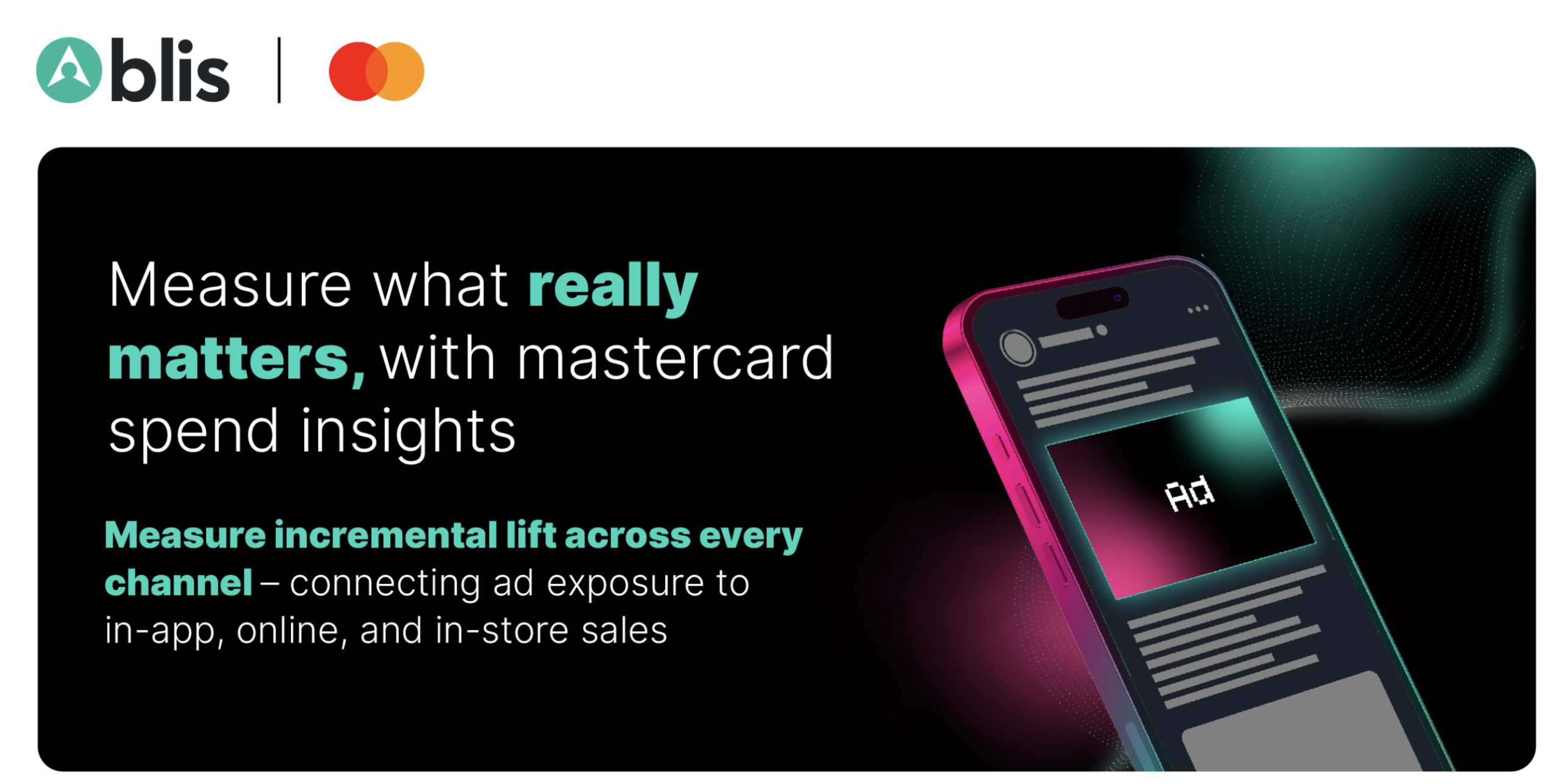


The measurement problem no one can ignore
Marketing has never been more measurable. And yet, it has never been harder to prove.
Today’s campaigns generate an abundance of data. Impressions, clicks, video views, completion rates, attention. But despite all this visibility, one critical question still goes unanswered:
Did this campaign actually drive real sales?
For most marketers, the honest answer is not with certainty.
The reality is that measurement has fallen behind the way people behave. Consumers move seamlessly between channels, devices, and physical locations, while measurement remains fragmented, inconsistent, and often incomplete.
At the same time, the foundations of traditional tracking are disappearing:
- Cookies are fading out
- Audience identifiers are becoming unreliable
- Platforms operate in silos, limiting transparency
- Attribution models vary by channel
- Online and offline behaviours rarely connect
The result is a growing disconnect between what campaigns deliver and what marketers can prove.
Advertising is easier to execute than ever before, but harder than ever to validate.
The hidden blind spots in modern measurement
The problem is not a lack of data. It is a lack of meaningful data.
Many of the metrics used to measure success today are proxies, not proof. And that distinction matters more than ever.
Consider where measurement breaks down:
Clicks don’t equal customers
A user might click multiple times and never convert, while another may see an ad once and make a high-value purchase.
Impressions don’t equal influence
Reach does not guarantee impact. Visibility is not the same as behavioural change.
Platform-reported results lack neutrality
Each platform measures its own performance, often without independent validation.
Offline sales remain largely invisible
In-store purchases, which still make up a significant share of retail revenue, are rarely connected back to media exposure.
Fragmentation creates conflicting narratives
CTV, display, DOOH, mobile, and audio all operate with different measurement frameworks, making it difficult to build a single, trusted view of performance.
Why this matters more than ever
These blind spots are not just a reporting issue. They are a business risk.
When measurement is unclear:
- Teams spend time defending numbers instead of optimising campaigns
- Clients lose confidence in results
- Finance teams question investment decisions
- Budgets become harder to justify
- High-performing campaigns may go under-recognised
Ultimately, when you cannot prove impact, you cannot scale it.
And in a climate where every pound is scrutinised, that is a problem no marketer can afford.
A new approach: measuring what actually matters
To solve this challenge, measurement needs to move beyond proxies and focus on real-world outcomes.
That is exactly what the partnership between Blis and Mastercard delivers.
Together, they have built a solution designed for the modern, privacy-first landscape. One that connects advertising exposure directly to real consumer spend.
Introducing Retail Sales Lift.
Retail Sales Lift: proof, not proxies
Retail Sales Lift is a privacy-first measurement solution that shows the true incremental impact of advertising on real sales.
It combines three powerful elements:
- Mastercard transaction data at scale
Using anonymised, first-party insights from over 170 billion annual transactions, Mastercard provides a verified view of real consumer spending behaviour. - Blis Smart Holdout Groups
Blis uses AI-driven geo-based testing to create statistically balanced control and exposed groups, isolating the true effect of a campaign. - Omnichannel measurement without IDs
The solution works across CTV, DOOH, mobile, display, and audio, without relying on cookies or personal identifiers.
The result is a clear, independent view of how advertising drives real business outcomes.
What you can actually measure
Retail Sales Lift moves beyond surface-level metrics to reveal how campaigns influence real behaviour.
Marketers can understand:
- Spend lift
- Transaction lift
- Average spend per transaction
- Online vs offline impact
- Weekday vs weekend performance
- Category growth
- Market share vs competitors
This is not estimated attribution. It is validated, real-world impact.
What this means for marketers
With Retail Sales Lift, measurement becomes a strategic advantage, not a limitation.
You can:
- Walk into client conversations with credible, independent proof
- Tie media investment directly to revenue outcomes
- Optimise campaigns based on real behavioural insights
- Align marketing performance with business performance
- Build stronger, more confident recommendations
Most importantly, you move from explaining activity to demonstrating impact.
The future of measurement is already here
As the industry moves toward a privacy-first future, the gap between delivery and proof will only widen for those relying on outdated approaches.
Blis and Mastercard are closing that gap.
By combining deterministic transaction data with advanced geo-based measurement, Retail Sales Lift gives marketers what they have been missing:
A clear, trusted answer to the question that matters most.
Did it drive sales?
If you want to explore this in more detail, join us on 26 March in Amsterdam at our upcoming event in partnership with Mastercard, “How to Drive and Prove True Incremental Sales.”
We’ll be sharing how marketers can move beyond proxy metrics and measure real business impact.